How to Select the Right Neodymium Magnet Grade (Without Over‑Engineering)
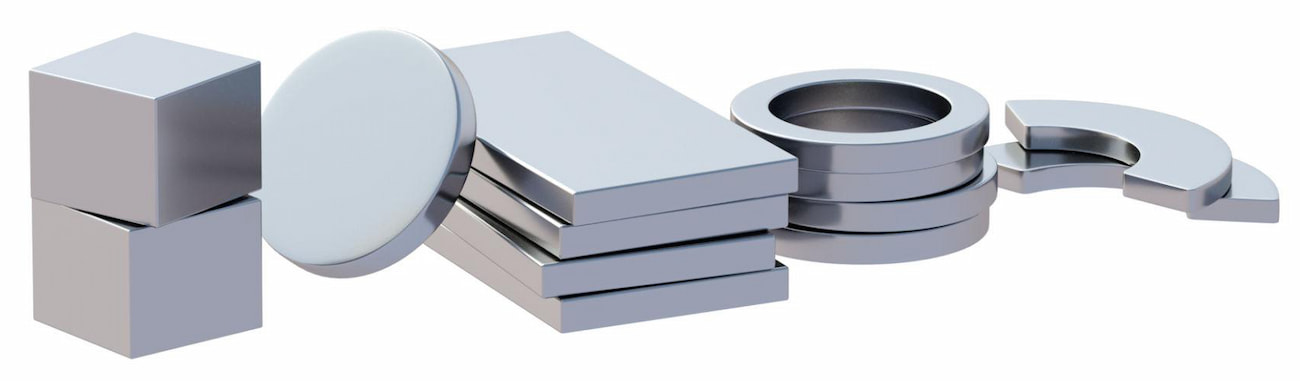
Neodymium (NdFeB) magnets offer unmatched magnetic strength, but selecting the right grade is more complex than simply choosing the highest energy product available. Many designs fail not because the magnet is too weak—but because it was over‑specified in  the wrong direction.
Start with operating conditions, not peak strength.
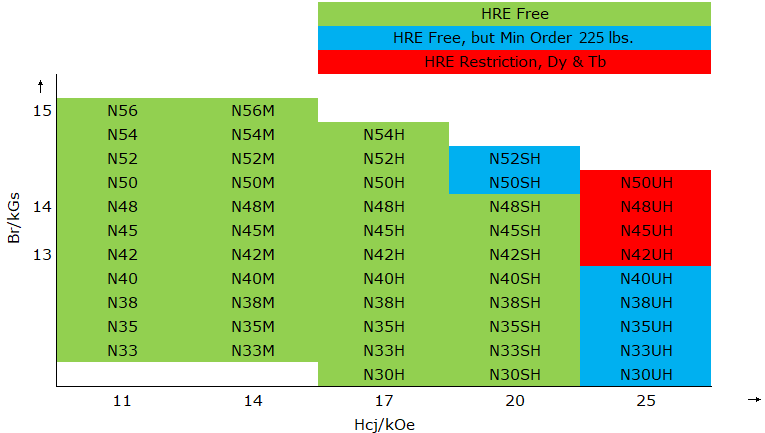
Standard NdFeB grades perform well up to ~80°C. If your application experiences higher continuous temperatures, thermal suffix grades (H, SH, UH, EH) become essential. Insufficient coercivity at temperature can lead to irreversible demagnetization—even if the magnet initially met performance targets.

Balance magnetic output with coercivity margin.
High energy product grades like N52 deliver impressive strength, but lower‑energy grades with higher coercivity often outperform them in motors, actuators, and high‑load environments. The goal is stable performance over the product’s full lifecycle—not maximum force on day one.
Consider supply‑chain resilience early.
Higher coercivity grades often rely on heavy rare earth elements (HREs) such as dysprosium or terbium. Where operating conditions allow, HRE‑free grades can reduce cost volatility and sourcing risk without sacrificing performance.

Think system‑level, not component‑level.
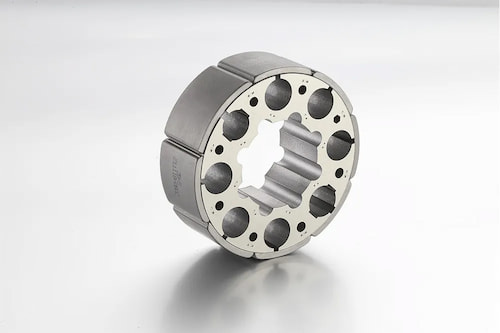
Air gaps, steel flux paths, magnet geometry, and tolerances all influence real‑world magnetic output more than datasheet values alone.
Key takeaway:
The “right” neodymium magnet is the one that maintains performance under real operating conditions—not the one with the highest nominal strength.
Ready to power your next breakthrough?
Contact Allstar Magnetics to discover how our turnkey approach can simplify your supply chain and deliver the results your team needs to succeed.