Why Standard Ferrite Cores Aren’t Enough—and What Precision Gluing Makes Possible

Why Standard Ferrite Cores Aren’t Enough—and What Precision Gluing Makes Possible
Precision Gluing

When off-the-shelf components hit their limits, bonded ferrite assemblies open new design possibilities.

The Problem Engineers Hit Every Day

You may have a transformer or inductor design that works perfectly on paper. The magnetic circuit is right, the flux path is optimized, and the dimensions are dialed in—and then the search for a matching ferrite core begins. That's when many engineers discover the part they need simply doesn't exist.

Standard ferrite cores are manufactured by pressing, which imposes hard limits on achievable size and geometry. If your design calls for a cross-section or length beyond what a single-piece pressing can produce, you're either forced to redesign around available inventory or start from scratch.

This is one of the most common constraints engineers face when developing custom magnetics for high-power transformers, large-format inductors, and specialized EMI suppression components.

Precision Ferrite Gluing: A Different Approach

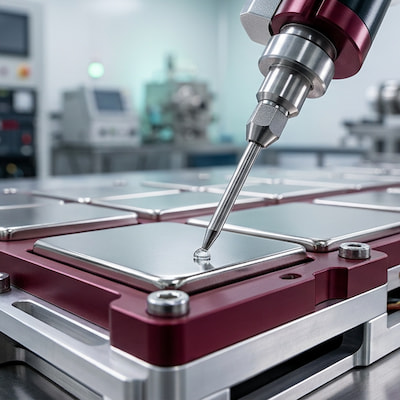
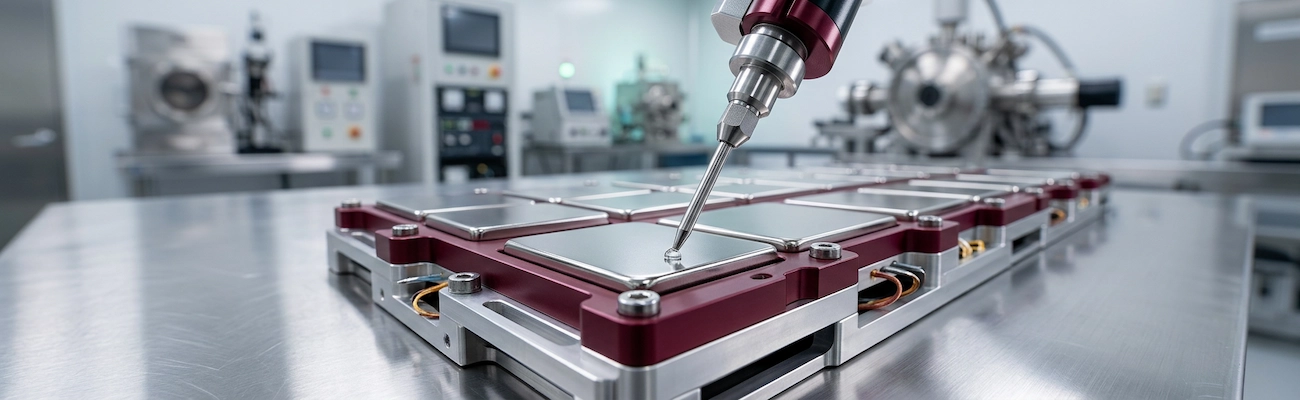
Precision bonding of ferrite core sections makes it possible to build magnetic assemblies that exceed the size limits of single-piece manufacturing. By joining ferrite segments with controlled adhesives and custom fixturing, engineers can create core geometries that simply can't be pressed in one piece.

The result is a custom UCore, ECore, or other assembly with the magnetic performance of a monolithic component—without the constraints.

But there's a catch. Ferrite is not a forgiving material. It's porous, brittle, and sensitive to alignment. Bonding ferrite cores is a fundamentally different challenge from bonding other materials, and getting it wrong introduces reluctance into the magnetic circuit, compromises dimensional stability, and creates quality problems that won't show up until production.

What Makes Ferrite Gluing Technically Difficult

Ferrite bonding requires careful control of several variables that don't exist in standard assembly processes:

  • Porous surfaces absorb adhesive differently than dense metals or plastics—adhesive systems must be selected and applied to account for this behavior
  • Bond line thickness must be held to 10–50 µm to avoid introducing reluctance into the magnetic circuit
  • Squareness and alignment must be maintained across the bonded interface to preserve flux path geometry
  • Low-shrinkage adhesive formulations are required to minimize post-cure stress on a brittle material
  • Temperature performance must be matched to the transformer's operating environment

Managing all these variables consistently—from prototype through production—requires process documentation, validated cure parameters, and fixturing designed specifically for ferrite.

The Allstar Approach: Manufacturing-First from Day One

At Allstar Magnetics, precision ferrite gluing begins before a prototype is built. Engineers review each design for production readiness—evaluating material behavior, tolerance strategy, alignment requirements, and process scalability as a system.

That means adhesive selection, fixturing design, and cure process development all move forward alongside design refinement—not after the fact. The result is a bonded ferrite assembly that performs at prototype stage and scales into volume production without disruptive process changes.

The Allstar Difference

What is validated at prototype translates directly into volume production. Documented work instructions, validated cure parameters, and repeatable fixturing systems are built in from the start—so the transition from prototype to production is predictable rather than problematic.

Real-World Results: A Ferrite UCore Beyond Conventional Limits

A leading equipment manufacturer came to Allstar with a requirement for a large ferrite UCore that exceeded what any off-the-shelf option could provide. The core needed to meet tight tolerances, maintain structural integrity, and be manufacturable at scale.

Allstar's engineering team co-developed a bonded ferrite solution through a focused prototype run, validating mechanical fit, dimensional accuracy, and in-system performance before transitioning to production. The result: a custom UCore that delivered the required size and precision while remaining cost-effective—and the basis for an ongoing engineering partnership as the customer continues to expand its ferrite core requirements.

When to Consider Precision Ferrite Gluing

Precision ferrite bonding is the right approach when:

  • Your design requires a core cross-section or length that exceeds single-piece pressing limits
  • Standard catalog geometries can't match your specific flux path requirements
  • You need a non-standard form factor to fit within a constrained footprint
  • You're developing a custom transformer or inductor for high-power or specialty applications
  • You need a scalable, production-ready solution—not a one-off workaround

Need a ferrite core solution beyond standard catalog limits? Contact Allstar Magnetics to discuss your application and request a quote.

Allstar Magnetics is an AS9100, AS9120, and ISO 9001:2015 certified manufacturer of precision magnetic assemblies, ferrite core solutions, and permanent magnet products, and is ITAR registered.


Allstar Magnetics - ISO - AS9100D Certification
Allstar Magnetics - ITAR Certification

Ready to power your next breakthrough?

Contact Allstar Magnetics to discover how our turnkey approach can simplify your supply chain and deliver the results your team needs to succeed.
A Case Study: The Right Magnet Was Already Out There.

A Case Study: The Right Magnet Was Already Out There.

How One Question Unlocked a Smarter, Sourceable Solution

Zero

Export License Required

1 Call

To Identify the Right Solution

Faster

Sourcing & Leading Time

THE SITUATION

A Legacy Design. A Sourcing Dead End.

A customer came to Allstar Magnetics with a problem that had quietly become a crisis. Years earlier, one of their engineers had designed a critical component around a samarium cobalt (SmCo) magnet — a perfectly reasonable choice at the time. The part worked. The product shipped. And then, eventually, they needed more.

The problem: they couldn't find anyone to make the magnets. Their original supplier was gone, and every new source they approached either couldn't meet the spec or couldn't meet it at a viable price. The design had become a bottleneck — and the clock was ticking.

"We needed these magnets. We'd been using SmCo for years and just assumed that's what we had to keep using."

THE INSIGHT

A Few Questions Changed Everything.

When Jason at Allstar Magnetics got on the phone with the customer, he didn't start with catalogs or lead times. He started with questions about how the magnet was actually being used.

It didn't take long to find the key fact: the application never actually reached the elevated temperatures that had originally justified using samarium cobalt. SmCo had been specified — likely out of caution or habit — but the thermal demands of the real-world environment were well within the range of a different material entirely.

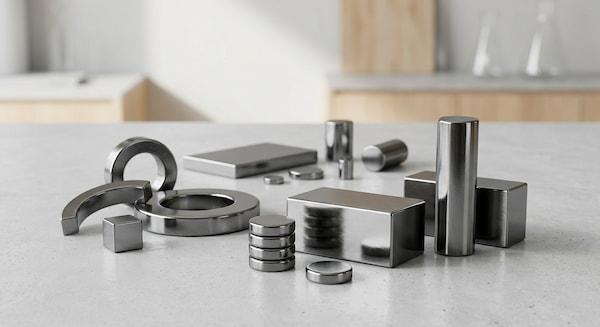
Jason identified that a high-temperature neodymium (NdFeB) magnet would perform just as well in this application. It could handle the actual operating temperatures. It met the magnetic performance requirements.

And critically — unlike samarium cobalt — it did not require an export license, removing a layer of regulatory complexity that had been adding friction and cost to the original spec.

THE OUTCOME

Sourceable. Compliant. Delivered.

With the material switch confirmed, Allstar moved quickly. The high-temp neodymium magnet matched the form, fit, and function of the original design. The customer avoided a costly redesign effort, eliminated the export licensing burden, and finally had a reliable, repeatable supply path for a part that had been holding them up.

The original SmCo specification wasn't wrong — it just hadn't been revisited. One conversation with someone who asked the right questions was all it took to unlock a better solution.

WORK WITH ALLSTAR

Not every magnet challenge has an obvious answer — but the right conversation usually finds one. If you're dealing with a sourcing problem, a legacy spec, or a design that needs a second look, talk to Jason directly

Jason Berry
Sales — Permanent Magnets (West)
jberry@allstarmagnetics.com
360-200-5675 DIRECT DIAL  

ADDITIONAL RESOURCES

How to Select the Right Neodymium Magnet Grade (Without Over‑Engineering)

How to Select the Right Neodymium Magnet Grade (Without Over‑Engineering)

How to Select the Right Neodymium Magnet Grade (Without Over‑Engineering)

Neodymium (NdFeB) magnets offer unmatched magnetic strength, but selecting the right grade is more complex than simply choosing the highest energy product available. Many designs fail not because the magnet is too weak—but because it was over‑specified in the wrong direction.

Start with operating conditions, not peak strength.

Standard NdFeB grades perform well up to ~80°C. If your application experiences higher continuous temperatures, thermal suffix grades (H, SH, UH, EH) become essential. Insufficient coercivity at temperature can lead to irreversible demagnetization—even if the magnet initially met performance targets.

Balance magnetic output with coercivity margin.

High energy product grades like N52 deliver impressive strength, but lower‑energy grades with higher coercivity often outperform them in motors, actuators, and high‑load environments. The goal is stable performance over the product’s full lifecycle—not maximum force on day one.

Consider supply‑chain resilience early.

Higher coercivity grades often rely on heavy rare earth elements (HREs) such as dysprosium or terbium. Where operating conditions allow, HRE‑free grades can reduce cost volatility and sourcing risk without sacrificing performance.

Think system‑level, not component‑level.

Air gaps, steel flux paths, magnet geometry, and tolerances all influence real‑world magnetic output more than datasheet values alone.

Key takeaway:

The “right” neodymium magnet is the one that maintains performance under real operating conditions—not the one with the highest nominal strength.

Ready to power your next breakthrough?

Contact Allstar Magnetics to discover how our turnkey approach can simplify your supply chain and deliver the results your team needs to succeed.
TAILOR-MADE LINEAR TRACKS

TAILOR-MADE LINEAR TRACKS

Tailor-Made Linear Tracks

Applications of Custom Linear Tracks
in Precision Environments
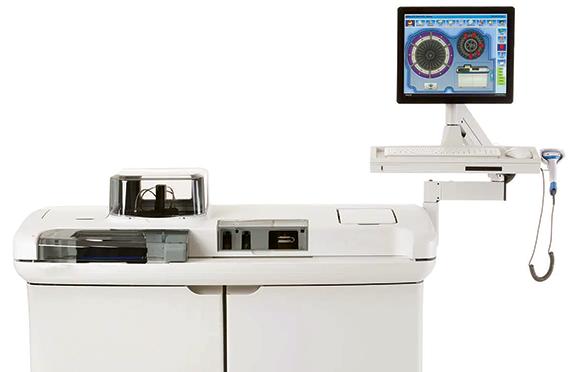
Applications for custom linear track can range from use in precision manufacturing cells such as wafer manufacturing or clinical lab testing to end products such as operating beds, tables and stages for MRI and CT scanners. Linear systems are ideal for applications requiring precise alignment and positioning, such as diagnostic sample transport, food processing, vision systems, industrial automation, and collaborative robot (cobot) machine tools.

Linear Track

The definition of linear motion is to move an object in a straight line. Linear motion systems can include motors, drives, couplers, actuators, sensors, bearings, slides, tracks, and other hardware components. When precision in motion control and positioning is critical, commercial off-theshelf (COTS) solutions often fall short. Linear tracks are a prime example, where COTS tolerances may not meet the rigorous demands of high-performance systems.

From Concept to Manufacture:
A Customized Approach
Since 1989, we have specialized in the development and manufacturing of custom magnetic solutions utilizing neodymium magnets and stainless steel. Our expertise lies in building complex magnet assemblies and systems.

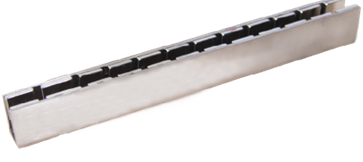
We utilize custom CNC tapping and specialtygrade steel backings to ensure structural integrity. Whether it’s flat or u-channel linear magnetic designs, , we refine concepts into manufacturable designs. We also take into account temperature and environmental effects on manufacturing processes, as well as adhesive specifications for varying environmental conditions such as humidity, heat, and outgassing, and their impact on machining tolerances. Our proprietary process is not only cost effective but also highly repeatable. Our unique approach allows us to provide customers with custom-built and staged linear motor tracks tailored for highly accurate motion control and positioning systems on demand.

Dynamic Performance in Custom
Linear Motion Systems
Linear motion systems have a wide range of dynamic performance. By customizing the motor and direct drive systems, high speed and acceleration can be achieved with exceptionally smooth velocity regulation and low ripple. They can also be customized to handle heavy or bulky load applications. Overall, linear systems have a lower cost of ownership due to less moving parts, reduced mechanical wear and reduced system operating costs.

The Cost vs. Performance Trade-off in
Custom Design
Designing a custom linear track involves a critical trade-off between cost and performance. COTS tracks are inexpensive but are limited to standard lengths, standard flat and U-channel sizes and set tolerances for position accuracy. Custom linear tracks requires design time, custom tooling, and custom manufacturing processes. If the volumes are small to medium, then the solution might not be cost effective unless you consider the total cost of ownership.

Many high-volume contract manufacturers do not have the experience or the safety training to handle strong rare earth magnets that are part of the sub-assemblies. There are safety, training, and manufacturing consideration when working with rare earth magnets.

Custom Linear Tracks For a Wide
Range of Applications

  • Diagnostic Sample Transport
  • Food Processing
  • Custom Assembly Processes
  • Robot/Cobot Systems
  • High Load Applications
Custom Linear Track Solution

Hall Effect Joystick

Hall Effect Joystick

HALL EFFECT JOYSTICK
Client: A leading manufacturer of control systems used in industrial automation.

Project Overview:
The client approached Allstar Magnetics to develop a precise, reliable, and durable joystick solution for use in their control systems. They needed a joystick that could withstand demanding environments while maintaining accuracy and durability. Allstar proposed the Hall Effect Joystick as a solution, utilizing magnetic fields to deliver superior performance in control systems across various industries such as aerospace, industrial machinery, and medical devices. The goal was to create a joystick that would enhance user experience, improve operational efficiency, and ensure resilience in challenging conditions.

Allstar’s Approach: Allstar Magnetics collaborated closely with the client’s engineering team to integrate the Hall Effect Joystick into their control systems. The process involved design development, rapid prototyping, and rigorous testing to meet the specific requirements of precision, durability, and reliability. By using Hall Effect sensors instead of traditional potentiometers, Allstar was able to offer a joystick solution that provided contactless operation, extending the product’s life expectancy and minimizing wear and tear.

Conclusion: Allstar Magnetics’ expertise in Hall Effect Joysticks and their innovative use of magnetic fields enabled the client to enhance their control systems with a solution that was durable, precise, and resilient in challenging environments. The partnership led to a scalable, cost-effective product that met the high demands of industries such as aerospace, industrial automation, and medical devices. Allstar’s commitment to quality and collaboration continues to make them a trusted partner in the development of next-generation control systems.

Key aspects of the project included:

  1. Consultative Design Support: Allstar worked with the client from the initial design phase, selecting materials and ensuring that the joystick would meet both functional and regulatory requirements. The team refined the design to maximize performance in terms of magnetic field detection, voltage conversion, and control signal precision.
  2. Durable, Non-Contact Design: The Hall Effect Joystick utilizes a magnet beneath the actuator to generate a magnetic field. As the joystick moves, the Hall Effect sensor detects changes in the field without physical contact. This contactless design ensures extended durability, offering a lifespan of over 10 million cycles with minimal maintenance required.
  3. Prototyping and Testing: Multiple prototypes were developed and tested under various environmental conditions, such as exposure to dust, moisture, and extreme temperatures. Allstar adjusted the design based on testing feedback to ensure the joystick’s performance met the client’s requirements for indoor and outdoor use.
  4. Scalable Production: Once the design was finalized, Allstar scaled production to meet the client’s volume needs. This process was optimized to ensure consistent quality, reliability, and costeffectiveness for mass production across their product lines.

Results:

  • Precision and Durability: The Hall Effect Joystick provided the client with an accurate, linear output, ensuring precise control in critical applications across industrial, medical, and aerospace sectors. Its durable, noncontact design significantly reduced wear and maintenance needs.
    • Improved Safety: The joystick’s built-in safety features, including redundant output signals and excellent electromagnetic immunity, contributed to safer operation in high-stakes environments such as medical devices and aerospace controls.
    • Enhanced User Experience: The joystick’s ergonomic design, combined with its resistance to shock and vibration, allowed for smoother operation in heavy machinery and industrial vehicles, providing a more intuitive user interface.

Multipole Radial Ring Magnets

Multipole Radial Ring Magnets

LiDAR TECHNOLOGY

Posted February 1, 2022

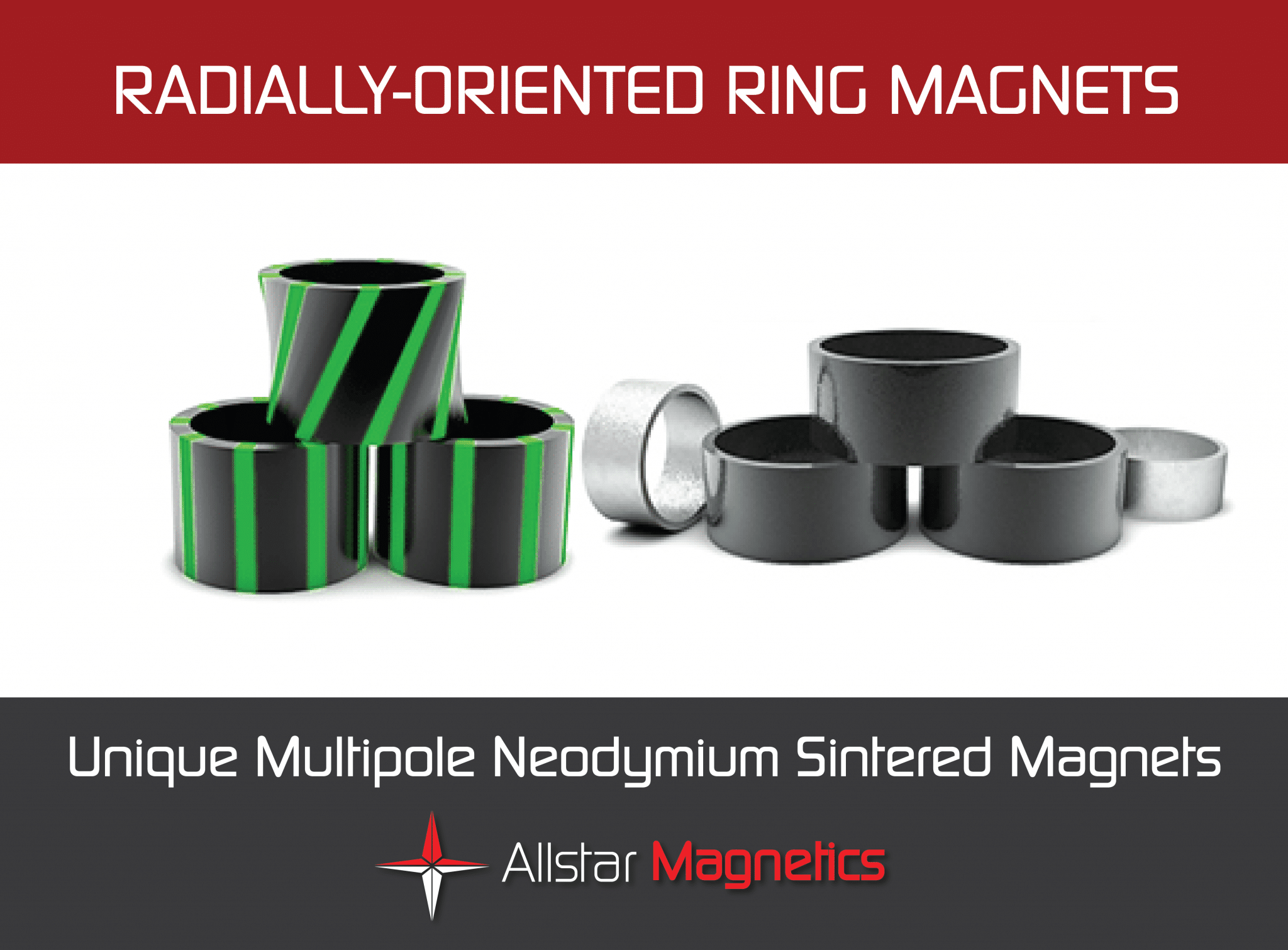
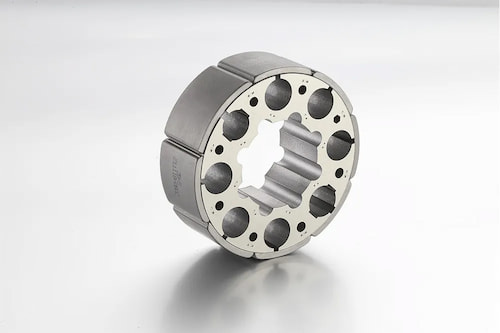
Radially-oriented ring magnets are a unique subset of NdFeB sintered magnets. Using proprietary technologies, a multipole ring can be sintered into a truly radial geometry. This replaces the costly and labor-intensive method of gluing arcs, bread loaves or rectangular segments onto a rotor shaft.

Allstar Magnetics now offers high-efficiency multipole Neodymium (NdFeB) magnetic rings. These rings are revolutionizing the permanent magnet space for synchronous motors, stepper motors and DC brushless motors widely used in automotive, specialty electronics, and medical applications.

Magnets are pressed to produce sintered NdFeB magnets. This process consists of combining base powders, pressing the resulting material, and then baking or sintering the resulting ring to achieve a radially magnetized product.

This new technology improves the uniformity of magnetic flux for increased motor efficiency and torque.  Other benefits include ease of assembly, superior mechanical properties and eliminates the re-work associated with chipped discrete magnets.

Contact our Engineering Design team today for more information and product specifications for radial ring magnets.